

I remember the day I walked my shoes off. I was lugging a giant portfolio case, it was drizzling, and it would have taken two hands to open my umbrella.
So I trudged on. Right into a puddle. What emerged was my foot, with only the top of a shoe. The sole, which had been flapping for a few days, had finally given up. It floated in the muck, like a sullen, bratty teenager.
I didn’t have money for a cab and was blocks from a subway. But I was across the street from my destination. My eyes darted from the puddle to the building; a ping-pong match where nothing happened.
I took a breath, bent down and plucked the soggy sole between my thumb and index finger. It hung, dripping, like a lifeless catfish. Holding it as far from my body as possible, I tried to wring it out, then closed my eyes and shook it. God knows how much bacteria splattered onto my jacket and into my pores. After a minute, I thwacked my wet sole onto the sidewalk and stepped on it. I tried to pinch the top of the shoe to the sopping bottom, hoping (bless my sweet, dumb heart) that the moisture might seal them together. It did not.
So I slid. Actually, I stepped with my good shoe and slid with my bad, across the street, into the building, onto the elevator and, squishingly, into the office of Fifi Jacobs.
Fifi, I’d been told, was the big sister every newly laid-off person needed. “She’ll give you good advice, she’ll be honest, and she’ll care about you,” my friend Doreen said.
I waited in the reception area with my portfolio at my feet, like a pet about to see the vet. I tapped my fingers on the arm of the chair more rapidly than I wished. I’d never had an actual interview, since the job I’d been laid off from hadn’t required one. Actually, none of the jobs I’d had to that point had required one.
I’d waitressed and worked as a coatcheck girl (a title that sounded sexy, but wasn’t) for a few years after college because I had no idea what else to do. I got a temp job at Backer Spielvogel Bates because I thought advertising might be for me. I loved it. As an administrative assistant in the Account Management department, I typed letters, opened mail and arranged meetings, which made me feel like a party-planner.
The first time an account guy asked if I wanted “some product” I thought, because of the glint in his eye, and because it was the 90’s, that he might be offering me a line of coke. I said yes, and was both relieved and disappointed when he led me to a closet filled with candy. It shouldn’t have come as a surprise, since I was assisting on the M&M/Mars account, but such things didn’t occur to me back then.
I loved it when Creative people came to the Account floor and did my best to let them know that I too, was cool. I chuckled when they said things like “Where are the suits?” even though I liked the account people - they were nice and gave me candy. And it was my boss, Janet Stanton, who lent me money to take my first Copywriting class at the School of Visual Arts.
Janet was confident in the way of most tall thin women with great wardrobes, and at first, I found her intimidating. Until, one day, she asked if there was something I wanted to do other than temp. I said I thought copywriting would be fun.
“Then do that,” she said, with a smile, as if that settled that.
Part of me wondered if she thought things were really that simple. But part of me thought maybe they could be.
A few weeks later, I sat in her office, after mustering the courage to ask if I could possibly, maybe, if it wasn’t a problem, borrow $250 for the class. Before I finished my overly-rehearsed question, she pulled a checkbook from her handbag, scribbled her name, and ripped the check from the book. The crispness of that act was the most impressive display of confidence I’d ever seen. Her conviction thrilled me and as I played it back later, I realized why her check-writing was so striking. She did it without hesitation, without checking that the decimal point was in the right place. She did it like a man.
I understood, at that moment, what it meant to have power. And how lovely it was when it was used kindly. I showed her the repayment plan I’d written on a piece of notebook paper - $50 a week for the next five weeks.
She waved it away and looked me in the eye with a little smile. “Go learn to be a copywriter.”
Her generosity changed my life. So did the class. When I got my portfolio together, a collection of laminated, hand-drawn print ads, I shared it with Charlie Breen, who, with Nick Gisonde, was Backer’s Chief Creative Officer. My interview with Charlie went like this:
Charlie: So, you’re Debra.
Me: Yes.
He smiled.
I smiled back.
Charlie: Ok. So, I’m thinking we’ll start you on British Airways and Fisher-Price.
Me: Oh! Wait. Like now? Do I… am I supposed to have an interview or something?
Charlie: Well, that’s kind of what this is.
Me: So then…
Charlie: Well, I already saw your book and it’s good. I just wanted to make sure you weren’t an asshole. And you don’t seem like one.
That’s how my career got started. Having a decent book and not being an asshole got me what entry-level people today can only dream of - an office, and two great accounts. I did print ads for British Airways that ran in The New York Times every week. This responsibility was given to a junior because it was annoyingly fast-paced and required constant changes since airline fares went up or down on a dime. Senior people worked on TV - big brands with huge budgets, like Miller Lite, Hyundai and Magnavox.
I waitressed three nights a week (in the shoes discussed above) to supplement my income. I was in heaven. Until the day I came back from lunch to see a square of Pepto-Bismol-colored-paper on my desk that said, “Please see me at 4:15.” It was signed by the head of HR. People had been getting laid off all day, but I’d been told I was safe because a) I was busy and b) I made too little money for anyone to care about firing me. It turned out, they needed to shave just a little more off the top and my $24,000 salary got them there.
I was told not to worry - I’d be an easy hire, because I had a lot of work that had actually run, there were plenty of jobs out there, and, as everyone seemed to like reminding me, I didn’t cost a lot. But my knowledge of other agencies was limited and I barely understood how the business worked.
Fifi, on the other hand, knew everything. She led me into her office, asked where I was from, where I went to college and all the other things you’d think she’d want to know. But she listened as I answered and asked follow-up questions - “Did you like Rutgers? I know someone who went there, maybe you know so and so?” She asked about where I lived and lit up when I said “MacDougal, between Bleecker and Third.” I suspected she was picturing a charming Greenwich Village building, versus the tenement in which I lived and with that thought came the realization that I’d have to get up my five flights without a shoe later. Thankfully, I’d be leaving my portfolio there.
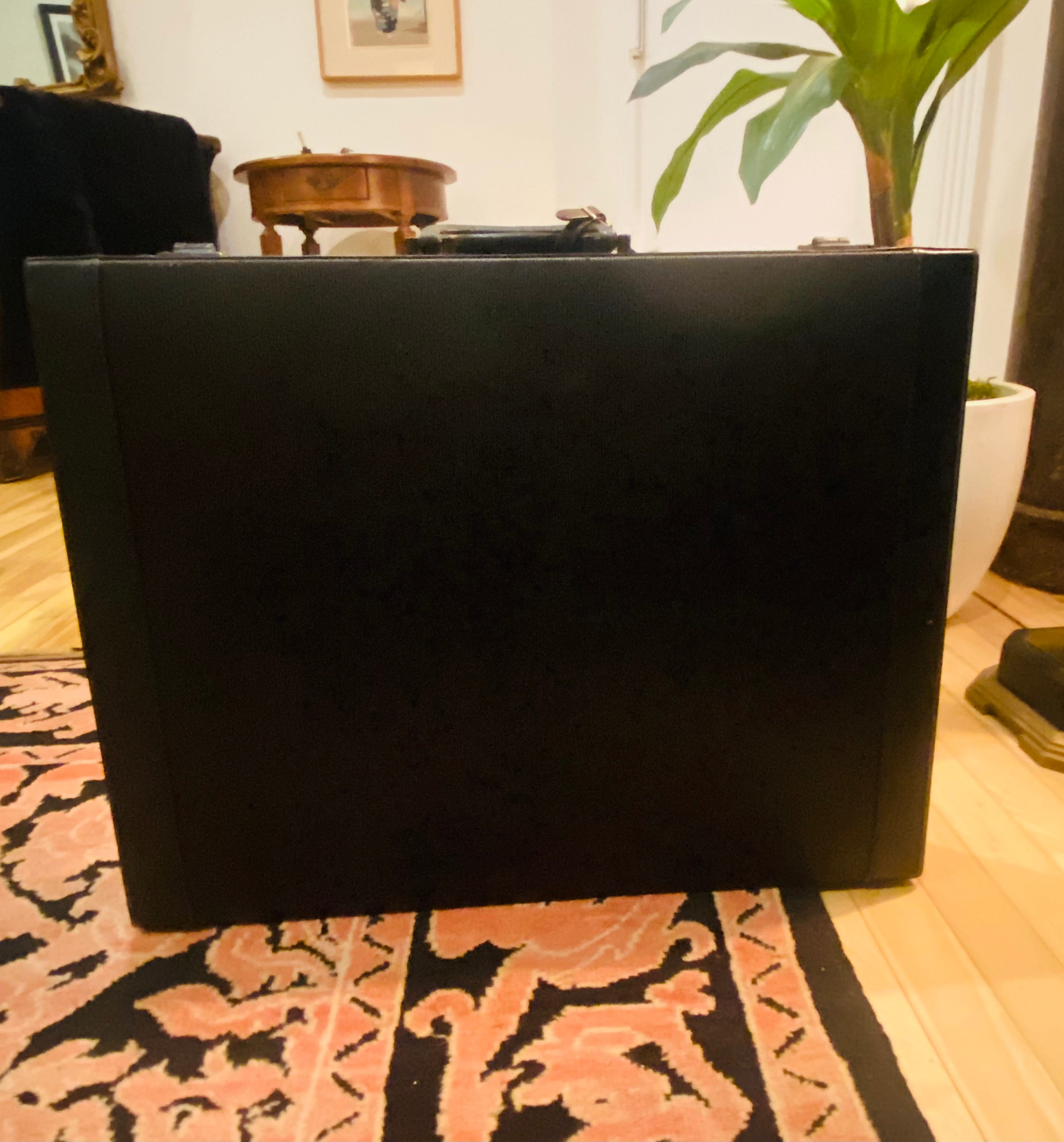
She opened my portfolio and one by one, spread its laminated ads onto her desk.
“Ah - I’ve seen this billboard!”
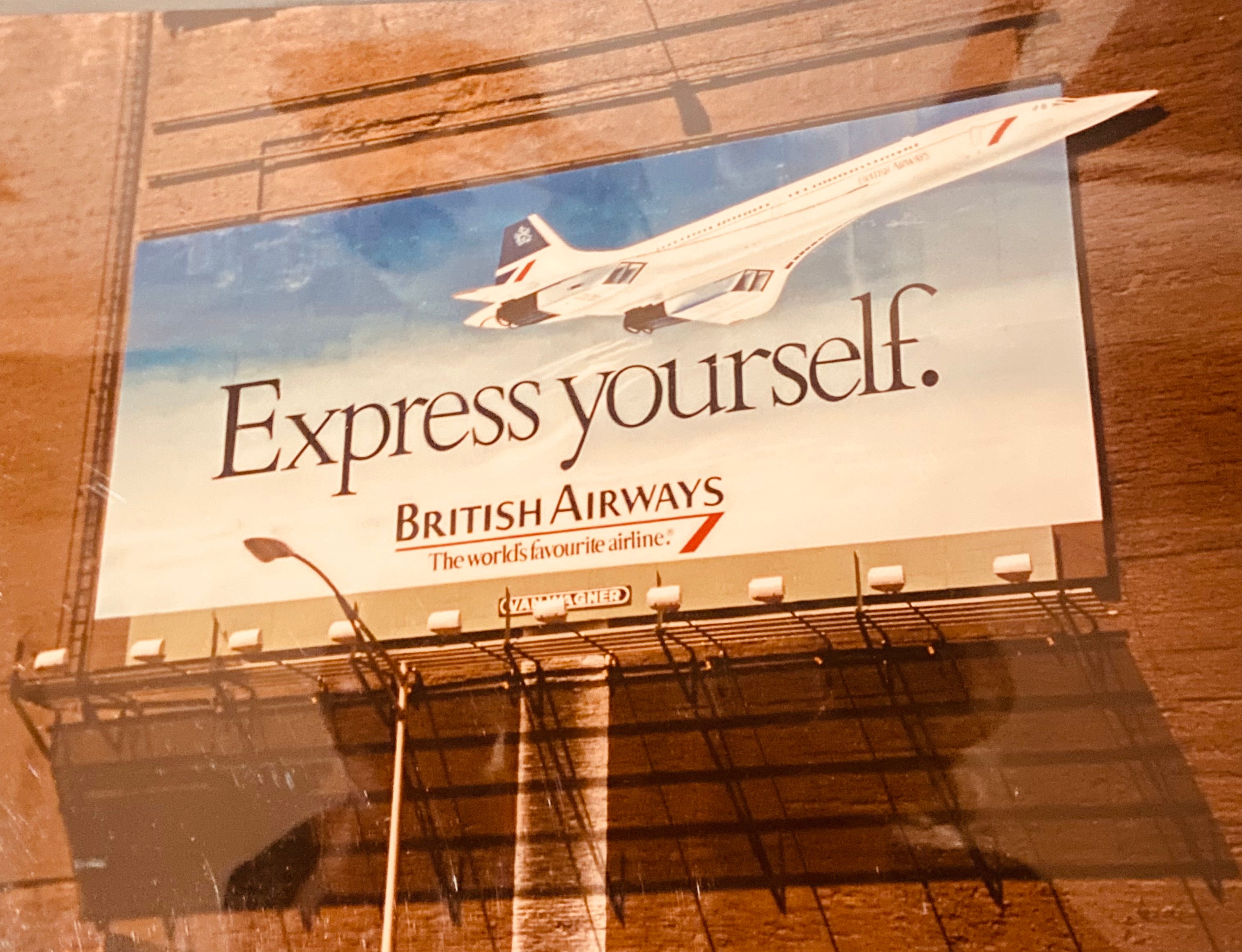
I told her it was still up, at the entrance to the Midtown Tunnel, and that my parents always drove into Manhattan that way so my father could give the horn a little beep when they saw it.
She looked at my work, said which ads she thought were strongest and suggested I leave a few out. I had produced one TV spot, for a Fisher-Price fire truck, which featured three-year-olds spraying hoses to the tune of The Blue Danube - “La la la la la, squirt squirt, squirt squirt.”
“It’s cute enough to keep for now,” she said, adding that soon, when I had more substantial TV under my belt, we could talk about whether to keep the Fire Truck spot. The certainty in her tone - not if, but when I had more TV - thrilled me. And the implication that we’d keep talking made me feel important.
We talked for 45 minutes and she said she’d make some calls.
“In fact, let me get Nancy on the phone now.”
I sat awkwardly as she talked, smiling into my lap when she referred to me as “very talented.”
Within a couple of weeks, I’d met Nancy and interviewed at a few places, including BBDO and Waring & LaRosa, the latter, through another great headhunter - Wendy Abrams. Shockingly, both agencies offered me jobs on the same day. Fifi called. Wendy called. Both spent time going over the pros and cons of a family agency versus an iconic one, big-brand TV versus small-brand edginess. The commission they’d make from the likes of me was tiny. Even I understood that. And yet. They took their time and made me feel that I mattered.
I was recently contacted by a family friend, a recent grad who’s been looking for a Strategy job. She’s applied to everything that comes up. She described spending hours creating videos, writing manifestos, finding charming ways to describe what makes her more uniquely qualified than the other 500 applicants. She works two jobs during the day and spends most nights on applications. Trying to stand out - praying to be seen. My kids went through the same thing when they were looking.
I don’t remember slip-sliding home after meeting Fifi that day. What I remember is the time she spent with me. We talked about our love of Norma Kamali (I’d gotten an off-the-shoulder sweatshirt on sale at Daffy’s and wore it constantly) and about Thirtysomething. We gossiped and laughed. She offered me a lifesaver. And without a doubt, she was one.
When I talk about how I waitressed while I worked my way up and acknowledge the long hours, weekends and nights I put in, I can’t help but feel proud. I was, and am hardworking (I had no choice - I grew up with parents who’d rather have raised a serial killer than a shirker.) Ultimately, I became a high-level creative director at a prestigious agency because of that hard work.
But to say I did it on my own would be ridiculous.
This is a heartfelt thank you to the Fifis of the world.
The Wendys.
The Nancys.
The Janets.
The women who saw something in girls like me - the Debras. The Doreens. The Andreas. The Alisons. The Vickys. The Jaynes. The Jackies.
Something that felt like belief.
Something we were able to pass along.
To the Jamies. The Emilys. The Gillians. The Graces. The Hayleys.
And so many more.
Flickers of brightness just waiting for a chance to shine.
Perfection. Once again. You captured the big hearted-ness of that era. And reminds us how badly this generation needs it from all of us. Beautiful.
Captivating as usual. What a beautiful tribute to those mentors...mentors who acted, not just pontificated!